Narcissus

Long ago, in the land of Thespiae, Greece, there was born to a nymph an uncommonly beautiful child. She named this child Narcissus. The beauty of this child never faded as he grew older; instead, it increased. By the young age of sixteen, Narcissus was the most beautiful mortal that had ever graced the earth. He was loved and sought after by women and men both. But to no avail, for, though he loved admiration, he rejected all his lovers and friends. He was very proud of his beauty and could find no room in his heart for another.

A lovely nymph named Echo was among the many that Narcissus rejected. As a result of this rejection, heartbroken and spirit shattered, Echo dwindled into nothing more than a voice only capable of repeating the words of others.

One day, while in the woods, Narcissus chanced upon a lake whose smooth, sheer surface made a magnificent mirror. Tired and worn out, he sat down to rest and refresh himself. As Narcissus approached the water’s edge to drink, he saw his own reflection. It was love at first sight. He reached out and attempted to embrace and kiss himself, only to realize that he was looking at his reflected image. This realization did not deter his fancy however. He glorified that he was himself but grief-stricken that he could not possess himself. This fact tormented him. Regardless, he chose to cling to this tormented love rather than another. Believing that he, at least, would be able to remain true to himself, whatever happened.

In some versions of the story, like Echo, Narcissus vanishes. In other versions, he becomes so hopelessly addicted with himself, that he –like Juliet – plunges a dagger in his heart. His blood is said to have spilled on the ground next to the lake, and on his deathbed there grew a white and red flowers which carry the name Narcissus to this day.

An analysis of the Narcissus myth provides us with a nearly complete catalog of the paradoxical spiritual ills that have crippled our world.  The pandemic of narcissism is rampant throughout the world and in Freemasonry as well. To be admired seems the main concern among many. Athletes have even degenerated from a contest of strength to a contest of personality. Athletes are not as interested in winning as they are in having a winning image, maximum publicity and huge salaries. Of course Americans want superstars on the silver screen, instead of actors. Beyond even that, while the majority of society is memorized by celebrities, only the minority is interested in current events. Narcissism can be easily seen in the realm of politics. Individuals on the “left” and the “right” abuse power to achieve their outcomes, regardless of the people. The people are willing to overlook these abuses perhaps in hopes that one day it will be better, or one day they will hold the scepter. Narcissism has also penetrated the walls of education. This is seen in the de-emphasis on discipline and the focus on fulfillment. Everyone is special, and everyone wins, the failure to tune-up the minds, the obsession with entertainment and technology. We are in fact training shallowness.

This same sickness, this need to be admired can be seen within our sacred craft; seeking for advancement without knowing why, hoping one day to just sit in the East or wear the purple for no other goal than to have a title. We see demands for admiration, success, power, and see them supplied – for a price. We see this in the progressive line that is neither backed by merit, nor reviewed for faults.  This is a spiritual disease, on a global scale. It has infected all of our lives, and we urgently need to reject it. There is a cure, but we have no time to deal with quackery. We must look deep into ourselves and determine what it is we want, why we want it and who gains from it. We must be honest with ourselves.

Either we heal as a team, or we will fail. Man by man, brother by brother. If we allow this disease to continue, the sacred fraternity as it has been, and how many envision it to become, will crumble. We must band together to fight our way back into the light, we must – each one of us individually, and together as a brotherhood – rage against the dying of the light. This band of brothers needs to fight together, not against each other. The Worshipful Master, Past Masters, Grand Master, Past Grand Masters, all the way down to the youngest Entered Apprentice can’t make you do it. You’ve got to want to fight for this yourself. You have to look at the brother next to you and look into his eyes. Optimistically, I think you will see a brother who will fight that fight with you. You’re going to see a brother who is willing to sacrifice his ego for this brotherhood; because he knows, when it comes down to it, you’ll do the same. That’s a fraternity. That’s the kind of organization that heals its wounds (that are mostly self-inflicted). That is the kind of brotherhood we have the ability to be part of. We either make that happen now, or we face radical changes as a group, and we die as individuals.

Half (of the Holy Life)

Upaddha Sutta

translated from the Pali by Thanissaro Bhikkhu


I have heard that on one occasion the Blessed One was living among the Sakyans. Now there is a Sakyan town named Sakkara. There Ven. Ananda went to the Blessed One and, on arrival, having bowed down to the Blessed One, sat to one side. As he was sitting there, Ven. Ananda said to the Blessed One, “This is half of the holy life, lord: admirable friendship, admirable companionship, admirable camaraderie.”[1]

“Don’t say that, Ananda. Don’t say that. Admirable friendship, admirable companionship, admirable camaraderie is actually the whole of the holy life. When a monk has admirable people as friends, companions, & comrades, he can be expected to develop & pursue the noble eightfold path.

“And how does a monk who has admirable people as friends, companions, & comrades, develop & pursue the noble eightfold path? There is the case where a monk develops right view dependent on seclusion, dependent on dispassion, dependent on cessation, resulting in relinquishment. He develops right resolve… right speech… right action… right livelihood… right effort… right mindfulness… right concentration dependent on seclusion, dependent on dispassion, dependent on cessation, resulting in relinquishment. This is how a monk who has admirable people as friends, companions, & colleagues, develops & pursues the noble eightfold path.

“And through this line of reasoning one may know how admirable friendship, admirable companionship, admirable camaraderie is actually the whole of the holy life: It is in dependence on me as an admirable friend that beings subject to birth have gained release from birth, that beings subject to aging have gained release from aging, that beings subject to death have gained release from death, that beings subject to sorrow, lamentation, pain, distress, & despair have gained release from sorrow, lamentation, pain, distress, & despair. It is through this line of reasoning that one may know how admirable friendship, admirable companionship, admirable camaraderie is actually the whole of the holy life.”

Notes

1. As AN 8.54 points out, this means not only associating with good people, but also learning from them and emulating their good qualities.

“Upaddha Sutta: Half (of the Holy Life)” (SN 45.2), translated from the Pali by Thanissaro Bhikkhu. Access to Insight (Legacy Edition), 30 November 2013, http://www.accesstoinsight.org/tipitaka/sn/sn45/sn45.002.than.html .

Duality

Let me start this with a story. Take your mind to London, October of 1886. A cold night where the fog of London spills into the streets from the alleyways; the wet cobble stones shine like silver in the moonlight and the orange glow from the candle lit streetlights seems to be swallowed in the cold of the dark. A London lawyer named John Gabriel Utterson investigates some dreadfully strange occurrences between his old friend, Dr. Henry Jekyll, and the evil Edward Hyde, a vial doppelganger described as “pure evil”.

This story is about a man who, in an alternative state of mind, commits multiple murders and other atrocities. When Dr. Jekyll comes to the realization of his own guilt, suicide seems his only option to forever silence his murderous side. And yet Mr. Hyde, somehow manages to survive. He has come into his own just as the true Dr. Jekyll.

On their weekly walk, an eminently sensible, trustworthy lawyer named Mr. Utterson listens as his friend Enfield tells a gruesome tale of assault. The tale describes a sinister figure named Mr. Hyde who tramples a young girl, disappears into a door on the street, and reemerges to pay off her relatives with a check signed by a respectable gentleman. Since both Utterson and Enfield disapprove of gossip, they agree to speak no further of the matter. It happens, however, that one of Utterson’s clients and close friends, Dr. Jekyll, has written a will transferring all of his property to this same Mr. Hyde. Soon, Utterson begins having dreams in which a faceless figure stalks through a nightmarish version of London.

Puzzled, the lawyer visits Jekyll and their mutual friend Dr. Lanyon to try to learn more. Lanyon reports that he no longer sees much of Jekyll, since they had a dispute over the course of Jekyll’s research, which Lanyon calls “unscientific balderdash.” Curious, Utterson stakes out a building that Hyde visits—which, it turns out, is a laboratory attached to the back of Jekyll’s home. Encountering Hyde, Utterson is amazed by how undefinably ugly the man seems, as if deformed, though Utterson cannot say exactly how. Much to Utterson’s surprise, Hyde willingly offers Utterson his address. Jekyll tells Utterson not to concern himself with the matter of Hyde.

A year passes uneventfully. Then, one night, a servant girl witnesses Hyde brutally beat to death an old man named Sir Danvers Carew, a member of Parliament and a client of Utterson. The police contact Utterson, and Utterson suspects Hyde as the murderer. He leads the officers to Hyde’s apartment, feeling a sense of foreboding amid the eerie weather—the morning is dark and wreathed in fog. When they arrive at the apartment, the murderer has vanished, and police searches prove futile. Shortly thereafter, Utterson again visits Jekyll, who now claims to have ended all relations with Hyde; he shows Utterson a note, allegedly written to Jekyll by Hyde, apologizing for the trouble he has caused him and saying goodbye. That night, however, Utterson’s clerk points out that Hyde’s handwriting bears a remarkable similarity to Jekyll’s own.

For a few months, Jekyll acts especially friendly and sociable, as if a weight has been lifted from his shoulders. But then Jekyll suddenly begins to refuse visitors, and Lanyon dies from some kind of shock he received in connection with Jekyll. Before dying, however, Lanyon gives Utterson a letter, with instructions that he not open it until after Jekyll’s death. Meanwhile, Utterson goes out walking with Enfield, and they see Jekyll at a window of his laboratory; the three men begin to converse, but a look of horror comes over Jekyll’s face, and he slams the window and disappears. Soon afterward, Jekyll’s butler, Mr. Poole, visits Utterson in a state of desperation: Jekyll has secluded himself in his laboratory for several weeks, and now the voice that comes from the room sounds nothing like the doctor’s. Utterson and Poole travel to Jekyll’s house through empty, windswept, sinister streets; once there, they find the servants huddled together in fear. After arguing for a time, the two of them resolve to break into Jekyll’s laboratory. Inside, they find the body of Hyde, wearing Jekyll’s clothes and apparently dead by suicide—and a letter from Jekyll to Utterson promising to explain everything.

Utterson takes the document home, where first he reads Lanyon’s letter; it reveals that Lanyon’s deterioration and eventual death were caused by the shock of seeing Mr. Hyde take a potion and metamorphose into Dr. Jekyll. The second letter constitutes a testament by Jekyll. It explains how Jekyll, seeking to separate his good side from his darker impulses, discovered a way to transform himself periodically into a deformed monster free of conscience—Mr. Hyde. At first, Jekyll reports, he delighted in becoming Hyde and rejoiced in the moral freedom that the creature possessed. Eventually, however, he found that he was turning into Hyde involuntarily in his sleep, even without taking the potion. At this point, Jekyll resolved to cease becoming Hyde. One night, however, the urge gripped him too strongly, and after the transformation he immediately rushed out and violently killed Sir Danvers Carew. Horrified, Jekyll tried more adamantly to stop the transformations, and for a time he proved successful; one day, however, while sitting in a park, he suddenly turned into Hyde, the first time that an involuntary metamorphosis had happened while he was awake.

The letter continues describing Jekyll’s cry for help. Far from his laboratory and hunted by the police as a murderer, Hyde needed Lanyon’s help to get his potions and become Jekyll again—but when he undertook the transformation in Lanyon’s presence, the shock of the sight instigated Lanyon’s deterioration and death. Meanwhile, Jekyll returned to his home, only to find himself ever more helpless and trapped as the transformations increased in frequency and necessitated even larger doses of potion in order to reverse themselves. It was the onset of one of these spontaneous metamorphoses that caused Jekyll to slam his laboratory window shut in the middle of his conversation with Enfield and Utterson. Eventually, the potion began to run out, and Jekyll was unable to find a key ingredient to make more. His ability to change back from Hyde into Jekyll slowly vanished. Jekyll writes that even as he composes his letter he knows that he will soon become Hyde permanently, and he wonders if Hyde will face execution for his crimes or choose to kill himself. Jekyll notes that, in any case, the end of his letter marks the end of the life of Dr. Jekyll. With these words, both the document and the novel come to a close.

Strange Case of Dr Jekyll and Mr Hyde is the original title of a novella written by the famous Scottish author Robert Louis Stevenson. The work is commonly associated with the rare mental condition often spuriously called “split personality”, where within the same body there exists more than one distinct personality. In this case, there are two personalities within Dr. Jekyll, one apparently good and the other evil; completely opposite levels of morality.

However, may I argue that the “dual personalities” interpretation is overly-simplistic? Jekyll himself notes that a person may be divided into many more than two distinct personalities — he expects that researchers in the future will discover that a person is made up of many different “selves”.  Another interpretation I may offer is the “civilized versus animalistic” approach. The description of Hyde as an almost pre-human creature and his actions that occur without thought, suggests that Hyde is more animal than man. Dr. Jekyll on the other hand, can be seen as existing in a constant state of repression, with the only thing controlling his urges being the possible consequences imposed by civilized society.

One branch of philosophy insists that human beings are ‘dual creatures’. By this is meant the animalistic side of a human being, being separate from man’s unique ability of rational thinking. This duality in humans is the not quite so obvious ‘lower level’ of meaning in Robert Louis Stevenson’s allegory The Strange Case of Dr. Jekyll and Mr. Hyde. The much more obvious, ‘higher level’ of meaning is that of a horror mystery. Stevenson puts across this duality in every human mainly through Henry Jekyll and Edward Hyde. The story also demonstrates how an innocent curiosity about our darker side of our nature can get out of hand. In all of us there is a seed of evil.

Anyone having read the book will know that Henry Jekyll turns into Mr. Hyde when having consumed a special potion. The brew awakens a dormant or hidden character; this is emphasized by a physical mutation. This physical mutation from a tall, slim, man of older age to a, younger, stronger, smaller and hairier build has an important imagery to it. The contrast between the suave, distinguished gentleman and the impulsive ‘animal’ is notable. Dr. Jekyll’s clothes do not fit Mr. Hyde; they are too small for him. Hyde therefore personifies the idea that the primitive evil is smaller, and that it can be controlled. Dr. Jekyll is a socially acceptable, repressed individual who still has a dark side. He can hide it though. Hyde on the other hand is the completely liberated.

Dr Jekyll and Mr. Hyde don’t represent ‘good’ and ‘evil’. The experiment described in Jekyll’s letter didn’t turn out as it was intended, which was to fully separate good and evil, with a character embodying each side. Instead, Hyde seems to personify the pure evil side of human nature. But Jekyll on the other hand, is not of pure good nature, he represents the control one has (or not!) over primitive spontaneous passions and desires. Dr. Jekyll thus symbolizes the idea of repression in a respectable individual. Hyde is completely liberated from Jekyll’s repression through the potion. He is the boundless entity that gives in to all desires. Hyde is not purely evil either, after having ‘trampled calmly’ a little, girl, Hyde himself speaks in a sincere manner and offers compensation for his acts. In that way, both sides of Jekyll are both good and evil.

The two characters also don’t make a divide between love and hate. Hyde does seem to have self-love; he dedicates himself to his egotistic desires, and in this sense seems to fulfill his need for both love and hate. Jekyll is seems more subdued, he feels both of these emotions, but has control over them. He does this in order to confirm to society. One could say that the underlying basis of this duality in Jekyll is his desire to be closer to what he feels from his ‘lesser’ self. He can’t behave the way he wants to because of the risk of the loss of his high social status, one of a respectable gentleman. In the disguise of Hyde, he can lurk around Soho and other dark, red-light districts, where he can fulfill his sinister desires, without putting his important reputation at risk.

In the last chapter Henry Jekyll claims to have control over Hyde. He says he can be rid of him when he chooses to. He is addicted to his other side nonetheless. Near the end, the reader learns that his excursions as Mr. Hyde are more and more frequent. This addiction and need to succumb to his primitive self develops into an almost complete loss of control. This is conveyed when Utterson and Enfield decide to go visit Jekyll, who has decided to close himself off completely, even from his friends and servants. Jekyll seems to be very weak at that time, reflecting his ‘weaknesses’ on controlling Hyde. He has to make his leave, because of what seems to be a ‘Hyde impulse’ he is trying to hide. He can control this impulse fully, so he has to hide away from his friends.

One could also assume that the duality in Stevenson’s novel is about a curiosity of, or the need to discover one’s primitive impulsive side. If we look at Utterson’s character, there is also this need to know about Hyde. When Mr. Enfield tells about Hyde, Utterson develops on obsession in knowing more about the mysterious dark character. He goes as far as being tempted ‘to disregard the prohibition’ of reading Dr. Lanyon’s narrative, which is only meant to be read if Dr. Henry Jekyll died or disappeared. In this way he also illustrates the existence of duality in every individual. He does restrain himself to following through his desire though, which shows that one has control over their animalistic side.

The moral of this interesting story is that which many Christians recite daily: “Lead us not into temptation, but deliver us from evil”. One needs to be in control of their darker side of human nature, and to stop this seed of evil from growing larger. Perhaps, the moral is that we cannot control evil once unleashed. Jekyll tries to ‘use’ Hyde to give in to his temptations without damaging his social position. This spirals out of control. The cost of Jekyll’s curiosity turned out to be a deadly reversal of dominance.

There great lessons to learn from the this strange case of Dr. Jekyll. Which side of our selves will we choose to foster and which will we choose to subdue. If I have come here to learn, to subdue my passions and improve myself, it seems clear to me that I will do all I can to become a better man. Sts Matthew and Luke both commented on this point when they wrote, “No man can serve two masters: for either he will hate the one, and love the other; or else he will hold to the one, and despise the other. Ye cannot serve God and mammon”. I dare argue that the God and Mammon these two saints referred to are within us; deep seeded and omnipresent. Which we choose to serve is up to us through this veil of tears. That is the great gift He lovingly trusted us with.

Lamb

7/16/16

This weekend I had the opportunity, between everything crammed into my busy schedule to go and visit a friend of mine in Arizona. This is a man who I worked with in Alaska, someone who I haven’t seen for at least 5 or 6 years. But like it is with a lot of my family and friends, at least those who I consider to be real family, it doesn’t matter if it’s been 6 years, or 6 days, it is always a rejoice to see each other. This trip brought a lot of things to mind, and things into question about my life (and the next). It was a good trip, but not because there was singing and dancing, but because there was honest thought and love. This was the hardest trip I have had in a long time. Not because of the solo drive and the short stay, but because of challenge I had with a common question I thought I had answers to. Let me explain…
lamb1

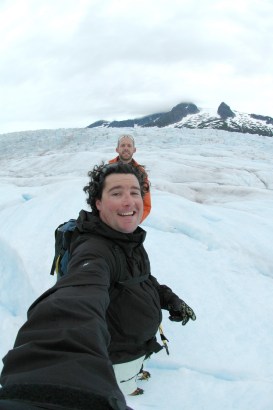
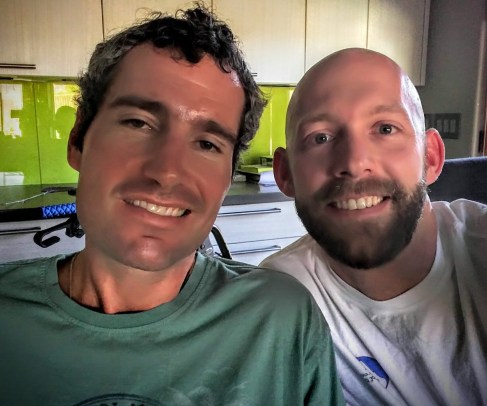
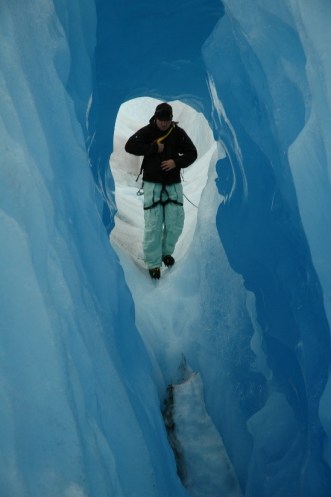
I need to start by telling you about this guy. I worked with Chris while I was at NorthStar trekking and Above and Beyond in Juneau Alaska. He and I met shortly after my brother Mike had passed away and Chris was somehow instantly special to me. He has that nature, he is the kind of guy that after a short while with him, you want him to be your friend for life. He’s the kind of guy that would give his shirt to a stranger, or his house to a friend. He sees the best in people and sees the world as a beautiful, mysterious adventure. He was skilled on the ice, and in the water (although I never had the opportunity to explore the deep with him). He is a talented artist and brings his passion into his daily living. He is the kind of guy that sees the world for how it could be, how wonderfully magical and peaceful it could be; and he feels the impressions of the universe around him. This is all complemented by his always smiling wife, Keely. She is a young, blond heli piolet who has not only allowed Chris to chase his feathers in the wind, but encourages him to and expects him to.

lamb2

I haven’t been to see Chris, despite our best intentions to get together more than once in the past, in what felt like a long time, and I guess 6 years is a long time. Regardless, I still held him as family, and he held me the same. We would text from time to time, but he had 3 kids and a life, where I had 2 and an equally demanding life. So, naturally as it seems friends to, we drifted. There is something though about the friends you make in Alaska – they may drift, but it somehow doesn’t change the relationship.

A couple years back, Chris was diagnosed with ALS. I heard about it by a post I saw on Facebook. When I read it, my jaw dropped. ALS, amyotrophic lateral sclerosis or Lou Gehrig’s disease, is a very rare (less than 20,000 cases in the US per year, nervous system disease that weakens muscles and impacts physical function. Although doctors think there is a genetic component, there’s no known cause. And although medication and help slow the process, and increase comfort, there is no cure. Most diagnoses say 2-5 years before it finally paralyzes your diaphragm and you pass away without the assistance of mechanical breathing. While your body rebels against you, you mind doesn’t; so all the while you’re still keenly aware of the world and your situation. I knew all this, and I knew that it wasn’t good. I had to see him. So I drove 9 hours south to his house for a 4-hour visit before turning and heading back – he would do the same for me and he would have mowed my lawn before he left.
lamb3

So a month ago, after seeing the post, I reached out to Keely and asked if I could come see him. She agreed and I started making plans with my family and work. When I finally got down there it was roughly 500 degrees in the shade at noon. I waited for him to come home, and when he did it took all my willpower not to break down sobbing. Here was a guy I knew to be an adventurer, a surfer, mountain climber, artist, musician whittled down by illness. Someone strong and tall with hair I would kill for. He could barely stand and required assistance when he was on his feet. Standing up out of his wheelchair we embraced and I cried. He, Keely, his three cool kids, and I spent the next few hours hanging out. Doing nothing. Talking about anything. Chris would smile his sideways smile at some stories I told from the past, but the disease had nearly taken all this voice and his smile and laugh were only shadows of what I remember. They are still in there, you can see them, hear them. They are just deep behind the assault of this disease process. I would put the glass of Alaskan Ale I bought for him in his hand, which it too had lost nearly all of its strength, and remember how strong and gentle these hands were. They made me think of my brother Mike’s hands. They were huge, Mike had paws that I have only ever seen on one other guy (Mike Miller). It made me remember my brother’s hands as his body laid in the casket. They were Mike’s, but they weren’t his. I don’t how to best explain this: This guy in front me was Chris, my good friend, a man I loved deeply, but it was Chris held back. I could see him wanting to jump out of his chair and say, “F***ing Eh Charlie!” like we used to. ALS had robbed him. He still laughed, he could still talk with me. Even still he was positive and told me he would beat it. He said it with a smile on his face and a warmth that radiated from his heart that seemed to overpower even the Arizona heat.

lamb4

I left too soon to make a long car drive home to see my kids and wife, and get ready for my hectic life to resume. But really I left to mend a broken heart. I stood him up again from his wheelchair and hugged him. Told him I loved him and he said, “I love you too.” I began to cry and wanted to find a way to eliminate the horror of the situation. I have seen disasters before. Working in the Emergency Room I see death and destruction too often. My heart goes out to many, and I have even sat with some patients and family and cried with them. However, it is always excusable in my life, something I can dismiss. I hugged Keely and walked out the door. I thanked them for letting me come, and walked to my car. I got in, and wept.

So here’s the rub… I love Chris, and I am sorry it too me so long, and something so monumental, to finally get off my butt and go see him. I am not sure when I will see him again, and that’s hard – really hard. That very well may have been a “good bye” visit (although I hope not) and I consider myself very fortunate to have someone so special in my life that a “good bye” visit is tough. I am lucky to have such a friend, and in that fortune, in my love for him and the blessings I have felt from him, the departure is tough. But as I thought more about it, I don’t think that was all why it was so hard for me. I think there is another level that plagues my mind.

lamb5

‘Why does God let bad things happen to good people?” I have heard this from a lot of people, a lot. I always thought I had a good answer that explained the thinking of God, or at least, the thinking of people around us. “Free Will” always came into the discussion at one point or another. But what about when it isn’t something that was influenced at all? ALS for example seems to be a selective and serious thing that no one really has any clue about. So why does it hit some and not others? Why Chris, why not me? If we want to bring God into this, the only thing that makes any sense at all in my mind in regards to that anymore is Matthew 5:45. Now, understanding that God allows His sun to rise on the evil and on the good, and “sendeth rain on the just and on the unjust,” I don’t feel like He is going to step into our lives very directly, very often. He has caused the sun to fit into a pattern and it does it, regardless of me or you. Much is the same in our lives – things are in motion, maybe by Him in some obscure way, or by others, and they are allowed to play out, come what may.

“What’s next? What happens when we die?” This is a tough one. I think it is tough because none of us have been there (at least that I have met) and all of us are going there (none of us get out of this life alive). I feel a lot my thinking on this has been influenced by my upbringing and the religion of my youth. I didn’t expect the conversation with Chris to get this philosophical (not that he isn’t capable, he certainly is) but that it was meant to be a lighter reunion and a time to celebrate. However, as I waited for him to come home, I sat and wondered if I was asked, “will I see you again?” “will I see my family again?” what would I say? I have learned somethings from my youth, and one thing is that I don’t know a lot of things. I have hope in a lot of the things I thought I knew, and faith in something greater than me. I know there is a loving Supreme Father who looks upon all of His children with hope and love. I don’t know what the afterlife looks like, but I have hopes and some suspicions. There is nothing that goes with us into the next life that we can carry. It’s only “us.” So what’s “us”? Our intelligence, soul, spirit. Whatever name we put to it, it is the part of us that is real. Everything else is just a temporary filler.
lamb6So this part of us that bears the nearest resemblance to the Divine, is the part that feels love, and hate. It’s the part of us that when we look at our children, bursts into a million pieces of gratitude. This is the part of us that lives past this life. Now, if we join some collective intelligence, or if we sit around talking about how great God is and worshiping at His feet, or if we get to have some job like paying a harp or helping create something, I don’t know. I suspect that there are many who, when they die, they go through a period of time ‘learning’ that they have died. I don’t think that our loved ones are waiting, as if at the airport, for us to arrive. I think there will be some kind of adjustment, some sadness for having left other loved ones still in the living world. I imagine that we may not totally recognize the afterlife world and the individuals there. However, I feel strongly that, once we have learned and accepted that we are no longer living, but that we are still alive, once we accept the Divine truths laid before us, we start the looking for people we love. Somehow I feel like they will be near, and the closer they were with us in this life, the easier they will be to find in the next. I am sure that they will be as anxious to find you as you will be to find them – which makes the hunt a little easier.

So do I think you will be with your wife and kids again after you die? Yes. What does that look like? I am not sure. Will God be there to shake your hand, kiss your face and divulge all the secrets of the Universe to you? I’m not sure. Maybe… but not at first. I think that will take time; time for us to learn a few things and accept a few things before something like that can happen. After all, the intelligence or spirit or soul that we are now doesn’t just automatically change just because we shed this bag of bones. At least, I don’t think so.

So my visit to Arizona, to see my longtime friend was a good one. Good that I had the chance to see him, tell him how much I love him and remember how amazing he is. Good to see his lovely wife and three awesome kids. It was good to contemplate some deeper things that I haven’t for some time. Good to feel so deeply that it still brings me to tears.

It was a good trip, but it was one of the saddest and spiritually wrenching trips. I am so angry with the universe for this injustice. Here’s a guy who loves his family has three amazing blessings that brought him so much joy. A 10-year-old daughter who looks at her dad like a hero. A 9-year-old who doesn’t understand why this had to happen and wishes he could change it. And 3-year-old who only knows this and is beautiful and playful. He has a wife who loves deeply and works hard. She is strong, she’d have to be to have loved this wanderer, and smart. A caring mother and a loving wife. Here’s a man who is one of the best I know, who loves to have adventures with his kids and wants to teach them how wonderfully mysterious and beautiful this life is. And yet… he is trapped in a cage, unable to do what he wants in the way he wants. I am still brought to tears and I feel guilty for shaking my fist at God thinking I know better than He does.

This trip also brought up a love of feelings I had when my brother died. Like, why did this happen? I don’t know. Will it take him away from this world too soon? I don’t know, but I imagine, yes. I feel like it already has in some ways. Will he be ok? I don’t know, I hope so. Will I see him again? I hope so. In this life or the next, I would feel incomplete in part if he weren’t out there somewhere in my world making it a better place like only he can.  It reminded me of a quote that was sent to me when Mike died that helped me let go of a little. “Why love, if losing hurts so much? I have no answers anymore: only the life I have lived. Twice in that life I’ve been given the choice: as a boy and as a man. The boy chose safety, the man chooses suffering. The pain now is part of the happiness then. That’s the deal.” So that’s the deal. I hurt and I am angry and confused and sad. I don’t have answers like I feel I should. I am lost in some way. So why do I love people when this is the result? The pain now is part of the happiness then. The happiness was a knife that carved into me only as far as the pain could go. They go hand in hand, and I am grateful for both when I really take a moment and ponder.

My brother Mike loved Winne the Pooh, and so do I. There is a lot of simple wisdoms in those books and cleaver stories. One that comes to mind with situations like this is chapter 10 in which Christopher Robin and Pooh come to an enchanted place, and we leave them there. Christopher Robin was going away. Nobody knew why he was going; nobody knew where he was going; indeed, nobody even knew why he knew that Christopher Robin was going away. But somehow or other everybody in the Forest felt that it was happening at last. And Eeyore the donkey reads his poem:

“Christopher Robin is going
At least I think he is
Where?
Nobody knows
But he is going-
I mean he goes
(To rhyme with knows)
Do we care?
(To rhyme with where)
We do
Very much
(I haven’t got a rhyme for that
“is” in the second line yet.
Bother.)
(Now I haven’t got a rhyme for
bother… Bother.)
Those two bothers will have
to rhyme with each other
Buther
The fact is this is more difficult
than I thought,
I ought-
(Very good indeed)
I ought
To begin again,
But it is easier
To stop
Christopher Robin, good-bye
I
(Good)
I
And all your friends
Sends-
I mean all your friend
Send-
(Very awkward this, it keeps going wrong)
Well, anyhow, we send
Our love
END”

I feel a bit like Eeyore here. It’s very awkward this. I feel like I should start over, but it’s easier to stop. I, and all your friends, send our love. Maybe in hopes that you can carry a portion of it with you wherever it is you will go.

In the end of chapter 10, Christopher asks Pooh, “Pooh, whatever happens, you will understand, won’t you?” Chris, in the end of it all, I will understand. I love you brother. I miss you. I hope to see you again.

lamb7